
The Complete Guide to Executive Communication in the Middle East
By Lisa Hugo | Executive Communication Coach, Keynote Speaker & Author | Dubai, UAE
Table of Contents
Executive Summary
Introduction
Chapter 1: Understanding Middle East Business Culture
Chapter 2: Verbal Communication Strategies for Executive Success
Chapter 3: Non-Verbal Communication & Executive Presence
Chapter 4: Navigating Hierarchy & Authority in Middle East Organizations
Chapter 5: Building Trust & Long-Term Relationships
Chapter 6: Industry-Specific Communication Insights
Chapter 7: Common Mistakes Executives Make (And How to Avoid Them)
Chapter 8: Practical Frameworks for Executive Communication Success
Conclusion: Your Path to Executive Communication Mastery
Key Takeaways
About the Author
Executive Summary
The Middle East represents one of the most dynamic and lucrative business regions in the world yet over 60% of Western executives report that their communication approach failed to produce expected results in GCC markets during their first two years of operation. The gap is not competence. It is communication.
This guide is written for C-suite executives, senior leaders, entrepreneurs, and government officials who operate in or with the Gulf Cooperation Council countries - the UAE, Saudi Arabia, Bahrain, Kuwait, Oman, and Qatar. Whether you are entering the region for the first time or seeking to deepen relationships you have already built, this resource will transform your approach.
Drawing on more than twenty years of executive coaching in Dubai and across the GCC, I have distilled the communication principles that separate executives who thrive in the Middle East from those who struggle. You will learn why relationship precedes transaction, how hierarchy shapes every conversation, when to be direct and when to be diplomatic, and what non-verbal signals can make or break a deal before a single word is spoken.
What makes Middle East communication different is not complexity - it is depth. Business here operates on trust, personal connection, and respect for cultural protocols that have governed commerce in this region for centuries. Executives who understand these dynamics gain an extraordinary competitive advantage. Those who ignore them face delays, misunderstandings, and lost opportunities they may never fully comprehend.
This guide is your definitive resource. Every chapter delivers specific, actionable strategies you can implement immediately - from your next board meeting in Riyadh to a client dinner in Dubai.
Introduction
Why Communication Determines Your Success in the Middle East
The Middle East is not a market where the best product wins. It is a market where the best relationship wins - and relationships are built entirely through communication.
I have coached Fortune 500 executives from companies like Emirates, Oliver Wyman, and Aldar Properties as they navigated the complexities of GCC business culture. The pattern I observe repeatedly is this: technically brilliant leaders arrive in the region with world-class strategies and fail to gain traction - not because their ideas lack merit, but because their communication style creates invisible barriers they cannot see.
Western communication defaults to efficiency. Get to the point. Present the data. Close the deal. In the Middle East, this approach signals something very different from competence - it signals a lack of respect. And in a culture where respect is the currency of business, that deficit is fatal.
The GCC economies are undergoing historic transformation. Saudi Arabia’s Vision 2030 is reshaping an entire nation. The UAE continues to position itself as a global hub for finance, technology, and innovation. Bahrain, Kuwait, Oman, and Qatar are each pursuing ambitious diversification agendas. The opportunity for executives who can communicate effectively across cultural lines has never been greater.
What makes this guide different from generic cross-cultural advice is specificity. I live and work in Dubai. I coach executives who sit across the table from ministers, royal family members, sovereign wealth fund directors, and multinational CEOs every week. The insights in this guide come from the boardroom, not the textbook.
How to use this guide: Read it sequentially for a comprehensive understanding, or navigate directly to the chapters most relevant to your immediate needs. Each chapter includes practical frameworks, real-world examples, and quick-reference tips designed for executives who need results, not theory.
The executives who master Middle East communication do not simply avoid mistakes. They build the kind of trust that opens doors no amount of technical expertise can unlock.
Chapter 1: Understanding Middle East Business Culture
The Foundation Every Executive Must Build
The single most important principle of Middle East business culture is this: relationship comes before transaction - always. No contract, proposal, or partnership will advance until the people involved have established personal trust. This is not a preference. It is a non-negotiable cultural foundation.
Relationship Before Transaction
In Western markets, a strong proposal can win business from a stranger. In GCC markets, a strong proposal from a stranger is simply a strong proposal from a stranger - it carries no weight until the person behind it has been vetted through personal interaction. Executives who understand this invest time in relationship-building before presenting any business case. Those who do not find themselves perpetually stalled, wondering why excellent proposals receive no response.
Key Insight: In the Middle East, your reputation arrives before you do. Introductions through trusted intermediaries carry more weight than any credential on your résumé.
Hierarchy and Respect
GCC business culture is deeply hierarchical. Seniority - whether by age, title, or family standing - determines who speaks first, who makes decisions, and how communication flows. Addressing a junior team member before acknowledging the senior leader in the room is not merely a social misstep; it is an insult that can terminate a relationship before it begins.
Titles matter. Use them. “Your Excellency” (Ma’ali), “Sheikh,” “Doctor” - these are not formalities to be discarded after the first meeting. They are ongoing markers of respect. When in doubt, err on the side of greater formality.
The Role of Formality and Protocol
Business meetings in the GCC follow protocols that Western executives often underestimate. Seating arrangements, the order of greetings, the exchange of business cards, and even the acceptance of coffee or tea carry cultural significance. Refusing Arabic coffee (gahwa) when offered by a host can be perceived as a rejection of hospitality - a serious breach in a culture where hospitality is sacred.
Quick Tip: Always accept the first cup of coffee or tea offered in a meeting. To signal you have had enough, gently tilt the cup side to side when returning it.
Patience and Time Orientation
Meetings in the Middle East rarely begin on time by Western standards, and they rarely follow a rigid agenda. Conversations may shift between business and personal topics fluidly. Interruptions - a phone call from a family member, a colleague entering the room - are not considered rude. They are part of the relational fabric of business.
Executives who display impatience - checking their watch, attempting to redirect conversation, or expressing frustration with delays - damage their standing immediately. Patience is not passive in this culture. It is a demonstration of respect and seriousness.
Religious and Cultural Considerations
Islam shapes the rhythm of business life across the GCC. Prayer times punctuate the workday, and meetings will pause for them without discussion. During Ramadan, business hours shift, and social norms around food and drink change significantly. Executives who acknowledge and respect these rhythms, without being asked to, earn genuine respect.
Avoid scheduling critical meetings during prayer times or on Fridays, the holy day in Islam. Understanding the Islamic calendar and its major observances is not optional - it is essential professional preparation.
Regional Differences Across the GCC
The GCC is not monolithic. Each country has distinct business norms:
UAE (Dubai and Abu Dhabi): The most cosmopolitan and internationally oriented. English is widely spoken. Business culture blends traditional Gulf values with global practices. Dubai moves faster than most GCC cities; Abu Dhabi is more formal and government-driven.
Saudi Arabia: Undergoing rapid transformation under Vision 2030, but deeply traditional in business protocol. Gender dynamics are evolving but remain more conservative. Government relationships are paramount.
Kuwait: Business is heavily family-driven. Relationships with established merchant families are critical. Decision-making can be slower and more consensus-oriented.
Bahrain: The smallest GCC state but a significant financial center. More relaxed socially than Saudi Arabia, with a strong banking and finance culture.
Qatar: Wealthy, ambitious, and selective. Post-FIFA 2022, Qatar is positioning itself as a global player. Business circles are tight-knit, and access requires strong introductions.
Oman: The most understated GCC country. Business is conducted with quiet formality. Omanis value modesty and discretion in communication.
Key Insight: Never assume that what works in Dubai will work in Riyadh. Each GCC market requires its own communication calibration.
Chapter 2: Verbal Communication Strategies for Executive Success
Mastering What You Say and How You Say It
The most effective verbal communication strategy in the Middle East can be summarized in one principle: say less, mean more, and deliver it with grace. Directness is valued - but only when wrapped in respect.
The Art of Indirect Communication
In GCC business culture, indirect communication is not evasion. It is sophistication. When a Saudi executive says “this is interesting, we will study it further,” that may mean the proposal needs significant revision. When an Emirati counterpart says “inshallah” (God willing) in response to a timeline question, it may signal genuine uncertainty - or polite reluctance to commit.
Learning to read between the lines is not optional. It is a core executive competency in this region. The subtlety of Arab communication reflects a culture that prioritizes preserving dignity and avoiding public embarrassment above all else.
Quick Tip: If you receive a vague or non-committal response, do not press for clarity in a group setting. Follow up privately, through a trusted intermediary if possible.
When to Be Direct vs. Diplomatic
There are moments when directness is expected - particularly in financial negotiations, contractual discussions, and safety-critical contexts. The key is knowing your audience. A second-generation Emirati executive educated at Wharton may prefer a more direct Western style. A senior government official in Riyadh will expect layered, diplomatic communication.
The safest approach: begin every new relationship with diplomatic communication and calibrate toward directness only as the relationship deepens and you receive clear signals that it is welcome.
Using Respectful Language and Titles
Arabic honorifics are not decorative. They are structural. Use “Sheikh” for members of ruling or prominent families. Use “Your Excellency” for government ministers and senior officials. Use “Ustaz” (a respectful form of “Mr.”) or “Ustaza” for professionals. When someone holds a doctoral degree, use “Doctor” consistently.
Mispronouncing a name or using an incorrect title is noticed - and remembered. Practice names before meetings. Ask your local contacts for guidance on pronunciation and appropriate forms of address.
The Power of Storytelling
Arab culture has a profound oral tradition. Storytelling is not a presentation technique - it is a deeply respected form of communication. Executives who can illustrate their points through narrative, parable, or analogy connect with GCC audiences at a level that data slides alone never achieve.
I coached a senior director from a leading global technology company preparing for a keynote in Abu Dhabi. We restructured her entire presentation around three stories from her career that illustrated the technology’s impact on human lives. The response from the audience was immediate and powerful - because story is the language of trust in this culture.
Managing Difficult Conversations
Confrontation in the Middle East is handled privately, never publicly. Criticizing someone in front of colleagues - regardless of how constructive the intent - is a violation that can permanently damage a relationship. Difficult feedback is delivered one-on-one, often through indirect language, and frequently through a trusted third party.
Key Insight: In the Middle East, saving face is not a social nicety - it is a fundamental operating principle. Every difficult conversation must be designed to preserve the dignity of all parties.
Language Considerations
English is the lingua franca of business in the UAE and is widely spoken across the GCC. However, learning key Arabic phrases demonstrates respect and earns goodwill:
As-salamu alaykum (Peace be upon you) - the universal greeting
Shukran (Thank you)
Inshallah (God willing)
Mashallah (God has willed it - used to express admiration)
Habibi/Habibti (My dear - used in informal, friendly contexts)
Even imperfect Arabic is appreciated. The effort itself communicates respect.
Fortune 500 executives I have worked with consistently report that using even basic Arabic phrases in meetings shifts the dynamic immediately - from transactional to personal.
Chapter 3: Non-Verbal Communication & Executive Presence
What Your Body Says Before You Speak
In the Middle East, non-verbal communication carries as much weight as words - sometimes more.
Your executive presence is evaluated in the first five to seven seconds of an encounter, and that evaluation is based almost entirely on non-verbal signals.
Body Language in GCC Culture
Posture communicates status. Stand tall, maintain an open stance, and avoid crossing your arms - which signals defensiveness or closed-mindedness. When seated, sit upright. Slouching is perceived as disinterest or lack of seriousness. Never show the sole of your shoe to another person - this is considered deeply disrespectful across Arab culture.
Eye Contact Norms
Eye contact practices in the GCC differ by context and gender. Between men, sustained eye contact signals confidence and sincerity. However, prolonged direct eye contact with someone of the opposite gender - particularly in more conservative settings in Saudi Arabia or Kuwait - can be perceived as inappropriate. Calibrate based on the signals you receive.
Personal Space and Physical Proximity
GCC business culture is more physically proximate than Western norms. Male colleagues may stand closer during conversation, and same-gender physical contact - a hand on the shoulder, holding hands while walking - is a sign of friendship and trust, not intimacy. Do not pull away. Accept this proximity as the gesture of warmth it represents.
Quick Tip: If a male Arab colleague takes your hand during a walk between meetings, reciprocate naturally. This is a significant sign of trust and rapport.
Gestures to Avoid
Specific gestures carry negative connotations in Arab culture. Pointing with a single finger is rude - use an open hand instead. The “thumbs up” gesture, while increasingly understood through global media, can still be offensive in traditional settings. The left hand is traditionally considered unclean; offer business cards, gifts, and food with your right hand or both hands.
Dress Code and Professional Appearance
Dress conservatively and impeccably. For men: well-tailored dark suits, polished shoes, understated accessories. For women: professional attire that covers shoulders and knees, with modest necklines. In Saudi Arabia, women may choose to wear an abaya in government settings as a sign of cultural respect - though this is increasingly a personal choice in business contexts.
Grooming standards are high across the GCC. Executives are expected to present a polished, authoritative appearance at all times. This extends to accessories - quality watches, pens, and briefcases are noticed and appreciated as markers of professional seriousness.
Voice Tone and Pacing
Speak with measured authority. Rapid speech signals nervousness or lack of gravitas. A steady, resonant tone conveys confidence and commands attention. Pause intentionally - silence in the Middle East is not awkward; it is a sign of thoughtfulness.
As a voice coach, I train executives to lower their pitch slightly and reduce their pace by 15–20% when communicating in GCC settings. The effect is immediate: they are perceived as more authoritative, more trustworthy, and more commanding.
Gender Considerations in Communication
Gender dynamics in GCC business are evolving rapidly, particularly in the UAE and Saudi Arabia under Vision 2030. Women hold increasingly prominent positions in government, finance, and technology.
However, communication norms vary by country and context. In mixed-gender settings in more conservative environments, allow your counterpart to initiate the handshake. Follow their lead on physical greetings - some may prefer a hand over the heart as a greeting instead.
Key Insight: Executive presence in the Middle East is built on controlled authority - measured voice, deliberate movement, impeccable appearance, and calm confidence.
Chapter 4: Navigating Hierarchy & Authority in Middle East Organizations
Understanding Who Holds Power and How Decisions Are Made
Middle East organizations operate through hierarchies that are simultaneously formal and deeply personal. The person with the highest title is not always the person with the most influence - understanding this distinction is critical to executive success.
Understanding Organizational Structures
GCC organizations - whether government entities, family conglomerates, or multinational subsidiaries - tend toward centralized decision-making. The founder, chairman, or senior family member often retains final authority on significant decisions regardless of the formal organizational chart. Middle management may have less autonomy than their Western counterparts, and decisions that would be made at the VP level in New York may require C-suite approval in Riyadh.
Communicating with Senior Leadership
When addressing senior leaders, be prepared but not presumptuous. Present your ideas clearly, but do not push for immediate decisions. Senior GCC leaders expect to be consulted, not cornered. Frame recommendations as options, not directives. Use phrases like “for your consideration” or “we would welcome your guidance on this matter.”
Protocol for Government Meetings
Government meetings in the GCC follow strict protocol. Arrive early. Dress formally. Bring business cards in both English and Arabic. Wait to be seated. Do not begin discussing business until your host signals readiness - often after initial pleasantries and refreshments that may last twenty minutes or more.
Quick Tip: In government meetings, bring a senior representative from your organization. Sending a junior executive to meet a senior official is perceived as disrespectful - regardless of that junior person’s expertise.
Decision-Making Processes
Decisions in GCC organizations are rarely made in the meeting room. The meeting is for presentation and relationship-building. The decision happens afterward - often through private consultation among senior stakeholders. Executives who expect to leave a meeting with a signed agreement will be disappointed. Those who leave having strengthened a relationship will eventually get the agreement.
Allow for what I call “decision gestation” - the period between presentation and commitment. During this time, maintain contact without pressure. Send a thoughtful follow-up. Provide additional information if requested. But do not chase.
Building Influence Across Levels
Effective executives in the Middle East build relationships at multiple levels simultaneously. Your primary contact may be a department head, but cultivating a respectful relationship with their assistant, their peers, and their subordinates creates a network of goodwill that supports your objectives. In Arab culture, the recommendation of a trusted aide can carry enormous weight with a senior decisionmaker.
Case Study: Navigating a Complex Government Partnership
An engagement team from a well known global consultancy I coached was struggling to advance a strategic initiative with a Gulf government ministry. Their presentations were flawless. Their data was impeccable. But progress had stalled for months. The issue was not content, it was communication architecture. They had been presenting exclusively to a mid-level committee without recognizing that the actual decision-maker, a deputy minister, had never been directly engaged. We restructured their approach: secured an introduction through a trusted local advisor, prepared a tailored executive briefing for the deputy minister, and shifted from presenting solutions to seeking his guidance. The initiative moved forward within three weeks.
Chapter 5: Building Trust & Long-Term Relationships
The Currency That Makes Everything Possible
Trust is the single most valuable asset in Middle East business. Without personal trust, no contract is secure. With it, opportunities emerge that no formal process could generate. Understanding how trust is built, maintained, and deepened is the most important skill an executive can develop in this region.
The Central Role of Trust and Wasta
Wasta, loosely translated as “connections” or “influence”, is the informal network of relationships that facilitates business across the GCC. Wasta is not corruption; it is a deeply rooted cultural system of mutual obligation and trust. An introduction from someone with strong wasta opens doors that cold outreach never will.
Building your own wasta requires time, consistency, and genuine investment in relationships. It cannot be manufactured or accelerated. Executives who approach wasta transactionally - seeking favors without building genuine connection - are quickly identified and marginalized.
Initial Meetings and Relationship Building
First meetings in the GCC are about chemistry, not commerce. Expect to spend the majority of the meeting on personal conversation - family, travel, shared interests, mutual acquaintances. This is not small talk. This is the evaluation process. Your counterpart is assessing your character, your values, and your trustworthiness.
Come prepared with knowledge of your counterpart’s background, interests, and achievements. Show genuine curiosity. Ask about their family - in Arab culture, asking “How is your family?” is not intrusive; it is expected and appreciated.
Key Insight: The first meeting is never about closing. It is about opening - opening the door to a relationship that, if nurtured, will produce results far exceeding any single transaction.
Social vs. Business Communication
The line between social and business communication in the GCC is deliberately blurred. A dinner invitation is a business meeting. A weekend gathering is a networking opportunity. An invitation to a family event is a significant marker of trust. Accept these invitations. Show up. Be present.
Entertainment and Hospitality Expectations
GCC hospitality is legendary - and reciprocal. If you are hosted lavishly, you are expected to reciprocate when the opportunity arises. The quality of your hospitality reflects the value you place on the relationship. Choose restaurants carefully. Ensure dietary requirements (halal food, no alcohol in conservative settings) are met without your guest having to ask.
Maintaining Relationships Over Time
Relationships in the Middle East require ongoing maintenance. A quarterly email will not suffice. Regular check-ins - even brief WhatsApp messages on holidays, congratulations on achievements, or condolences during difficult times - maintain the connection. I advise my clients to maintain a “relationship calendar” that prompts regular touchpoints with their key GCC contacts.
Handling Conflicts While Preserving Relationships
When conflicts arise, and they will, the imperative is to resolve them without public embarrassment. Engage a mediator if necessary. Approach the conflict as a misunderstanding to be clarified rather than a wrong to be corrected. The relationship must survive the conflict, or both parties lose far more than the issue at stake.
Cultural Gift-Giving and Reciprocity
Gift-giving in the GCC follows specific customs. Gifts should be high quality but not ostentatious. Avoid alcohol and pork-derived products (such as leather from pig skin). Present gifts with both hands. A beautifully packaged gift from your home country - artisanal chocolate, a fine book, a luxury pen - demonstrates thoughtfulness. Personalization is deeply appreciated.
Quick Tip: During Ramadan, sending a thoughtful Iftar gift basket to your GCC contacts is a powerful relationship gesture that demonstrates cultural awareness and personal care.
Chapter 6: Industry-Specific Communication Insights
Adapting Your Approach by Sector
Each industry in the GCC carries its own communication norms, shaped by the sector’s history, stakeholders, and strategic importance to the region.
Energy Sector (Saudi Arabia, UAE, Qatar)
The energy sector remains the economic backbone of the GCC. Communication in this sector is formal, technical, and government-adjacent. Executives must be prepared to engage with both technical specialists and government stakeholders - often in the same meeting. National oil companies like Saudi Aramco, ADNOC, and QatarEnergy operate with military-grade protocol. Precision in language, punctuality in delivery, and absolute reliability in commitments are non-negotiable.
Financial Services (Dubai, Bahrain)
Dubai International Financial Centre (DIFC) and Bahrain’s financial sector blend Western banking practices with regional relationship dynamics. Communication is more internationally oriented, but trust-building remains essential. Regulatory language must be precise. In Islamic finance, familiarity with Sharia-compliant terminology - sukuk, murabaha, ijara - is expected, not optional.
Government and Public Sector
Government communication across the GCC demands the highest level of formality and protocol. Written correspondence should be in both Arabic and English. Meetings require advance coordination through official channels. The pace is deliberate. Government stakeholders are making decisions that affect national strategy - treat every interaction with the gravity it deserves.
Technology and Innovation
The GCC tech ecosystem, particularly in the UAE and Saudi Arabia, is younger, faster, and more globally connected. Communication styles in tech can be more informal, especially in startup ecosystems like Dubai’s DIFC Innovation Hub or Riyadh’s tech corridor. However, when tech companies engage government clients or sovereign investors, the traditional rules reassert themselves fully.
Real Estate and Construction
This sector is relationship-intensive and deal-driven. Communication is direct by GCC standards, but personal relationships with developers, investors, and government land authorities remain paramount. Site visits, social gatherings, and hospitality play outsized roles in advancing projects.
Chapter 7: Common Mistakes Executives Make (And How to Avoid Them)
The Errors That Derail Careers and Deals
In more than two decades of coaching executives in the Middle East, I have seen the same mistakes repeated by otherwise brilliant leaders. Every mistake on this list is avoidable - if you are willing to set aside assumptions and learn.
Rushing to Business
The most common mistake. Western executives who open with a PowerPoint presentation before establishing rapport signal that they value the transaction more than the relationship. Always invest in personal connection first - even if it means your agenda slides to the second meeting.
Being Too Direct or Confrontational
Blunt criticism, public disagreement, or aggressive negotiation tactics are relationship-ending behaviors in the GCC. Frame feedback constructively. Disagree diplomatically. Never back someone into a corner publicly.
Ignoring Hierarchy and Protocol
Addressing the wrong person first, sitting in the wrong seat, or failing to use proper titles are errors that seem minor to Western executives but carry significant weight in GCC culture. Research protocol before every meeting. When in doubt, ask your local contacts.
Cultural Insensitivity
Scheduling meetings during prayer times, offering alcohol to observant Muslims, making casual remarks about religion or politics, or displaying impatience during Ramadan - each of these signals a fundamental lack of respect that no business acumen can overcome.
Impatience with Decision Timelines
GCC decisions operate on relationship time, not calendar time. Pressing for deadlines, sending follow-up emails daily, or expressing frustration with delays communicates a transactional mindset that undermines trust.
Improper Use of Humor
Humor in the Middle East requires cultural fluency. Sarcasm, self-deprecation, and irony - staples of Western executive communication - can be misinterpreted or perceived as weakness. Use humor sparingly until you understand your audience’s sensibility. Never use humor that touches on religion, politics, or cultural practices.
Gender Dynamics Misunderstandings
Assuming that women in GCC business lack authority, or conversely, making a point of highlighting gender in professional settings, are both errors. Treat every professional as a professional. Follow the lead of your counterparts on physical greetings and social protocols.
How to Recover from Mistakes
Mistakes will happen. When they do, acknowledge the error privately and sincerely. A genuine apology - delivered with humility and without excessive explanation - is almost always accepted. Engage a trusted local advisor to help you navigate the recovery. In Arab culture, grace in admitting error is itself a sign of strength.
Quick Tip: If you are unsure whether you have made a cultural misstep, ask a trusted local colleague privately. They will appreciate your awareness and willingness to learn.
Chapter 8: Practical Frameworks for Executive Communication Success
Tools You Can Use Immediately
Theory without application is meaningless. This chapter provides concrete frameworks you can deploy in your next GCC engagement.
The Influential Voice Framework Applied to the Middle East
My Influential Voice Framework, developed through twenty years of coaching executives across cultures, centers on three pillars: Authority, Authenticity, and Adaptability. In the Middle East context:
Authority: Project calm, measured confidence. Speak with vocal gravitas. Present credentials
through reputation and introduction, not self-promotion.
Authenticity: Be genuine in your interest in people and culture. GCC professionals detect
performative behavior instantly.
Adaptability: Calibrate your communication style to each country, industry, seniority level, and
individual. Rigidity is the enemy of effectiveness.
Pre-Meeting Preparation Checklist
Research all attendees - names, titles, backgrounds, and pronounce names correctly
Confirm appropriate dress code for the specific context
Prepare business cards in English and Arabic
Identify the senior decision-maker and their communication preferences
Prepare personal conversation topics (avoid religion and politics)
Confirm meeting logistics - location, timing relative to prayer times, parking
Arrange for an Arabic-speaking colleague or translator if needed
Prepare a thoughtful gift if this is a first meeting with a senior leader
Meeting Structure and Flow
First 15–20 minutes: Personal conversation, tea/coffee, relationship building
Transition: Follow your host’s lead on shifting to business topics
Presentation: Keep it concise, visual, and story-driven; leave detailed documents for follow-up
Discussion: Invite input respectfully; do not dominate
Close: Summarize next steps without pressing for commitments; express gratitude
Follow-Up Protocols
Send a personalized thank-you message within 24 hours - WhatsApp is often more appropriate than email in GCC business. Provide any requested materials promptly. Reference personal topics discussed in the meeting to reinforce the relationship dimension. Do not follow up on decisions more than once per week unless invited to do so.
Communication Cadence
Maintain a regular but not intrusive rhythm of contact with GCC stakeholders. Monthly personal check-ins, quarterly face-to-face meetings when possible, and timely messages on Islamic holidays and national celebrations keep relationships warm without creating pressure.
Key Insight: The framework that succeeds in the Middle East is simple: prepare deeply, connect personally, communicate respectfully, and follow through relentlessly.
Conclusion: Your Path to Executive Communication Mastery
The Advantage That Cannot Be Copied
The principles in this guide are not secrets. They are available to anyone willing to invest the time and humility to learn. Yet remarkably few Western executives make that investment - which means that those who do gain a competitive advantage that is nearly impossible to replicate.
Cultural fluency in Middle East communication is not a soft skill. It is a strategic asset. Executives who communicate effectively across cultural lines close deals faster, build more resilient partnerships, avoid costly misunderstandings, and earn access to opportunities that remain invisible to their less culturally attuned competitors.
The GCC region is entering a period of unprecedented growth and transformation. Vision 2030 in Saudi Arabia, the UAE’s diversification strategy, Qatar’s post-World Cup global positioning, and the broader economic evolution across the Gulf are creating opportunities on a historic scale. The executives who will capture these opportunities are those who combine world-class expertise with world-class communication.
Your next step is to begin. Choose one principle from this guide and apply it in your next GCC interaction. Notice the difference. Then add another. Communication mastery is not achieved through reading - it is achieved through practice, feedback, and continuous refinement.
If you are ready to accelerate your executive communication skills for the Middle East, I invite you to explore my Influential Voice coaching program, designed specifically for senior leaders operating in the GCC. From one-on-one coaching to team workshops, I help executives transform their communication from competent to commanding.
The Middle East rewards those who communicate with respect, patience, and genuine human connection. Master these principles, and you will not only succeed in business, you will build relationships that endure for decades.
Key Takeaways
Relationship before transaction - always. No business advances in the GCC until personal trust is established.
Respect hierarchy relentlessly. Titles, seniority, and protocol are structural elements of communication, not optional courtesies.
Master indirect communication. Learn to read between the lines and deliver difficult messages with diplomatic grace.
Patience is a strategic asset. Decisions are made on relationship time; pressure accelerates nothing and damages everything.
Non-verbal signals speak loudly. Dress impeccably, control your voice and pacing, and understand physical proximity norms.
Each GCC country is different. What succeeds in Dubai may fail in Riyadh. Calibrate your approach to each market.
Storytelling outperforms data slides. Narrative is the language of trust in Arab culture.
Save face at all costs. Never embarrass anyone publicly, regardless of the context.
Invest in Arabic - even minimally. A few phrases in Arabic signal respect and earn disproportionate goodwill.
Maintain relationships continuously. Regular, personal touchpoints sustain the trust that drives business.
Recover from mistakes with humility. A sincere, private apology is almost always accepted and respected.
Cultural fluency is a competitive advantage. The executives who invest in understanding Middle East communication will outperform those who do not - every time.
About the Author
Lisa Hugo is an executive communication coach, keynote speaker, author, and the creator of the Influential Voice program. Based in Dubai for over twenty years, she has coached C-suite executives, entrepreneurs, and government officials across the GCC, helping them communicate with authority, authenticity, and cultural intelligence.
Her clients include leaders from Fortune 500 companies as well as senior figures in UAE and Saudi government institutions. Lisa specializes in public speaking, executive presence, voice coaching, and cross-cultural communication for the Middle East market.
A published author and podcast host, Lisa combines deep cultural expertise with practical communication frameworks that produce measurable results. She is widely recognized as the leading authority on executive communication in the Middle East.
Copyright © 2026 Lisa Hugo/Audacia Marketing Management LLC, All rights reserved.
Ready to transform your executive communication?



She’s helped 1000s of clients around the world to develop their speaking skill with her 1 : 1 coaching and powerful programs, each centered on a different aspect of speaking, including confidence, voice, presentation, and body language.
COMPANY
LEGAL
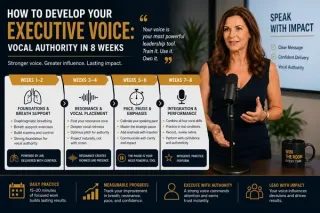
How to Develop Your Executive Voice: Vocal Authority in 8 Weeks
Develop your executive voice with this 8-week vocal authority program. Learn breath support, resonance, pace, pause, and practice routines for senior leaders. ...more
Improve Public Speaking Skills: Expert Tips by Lisa Hugo ,Corporate Communication Tips for CxOs & Executives
July 14, 2026•7 min read
Looking for webinar funnels, digital marketing or a client acquisition system for your coaching or consulting business?
Copyright © 2026 Audacia Marketing Management LLC, All rights reserved.